
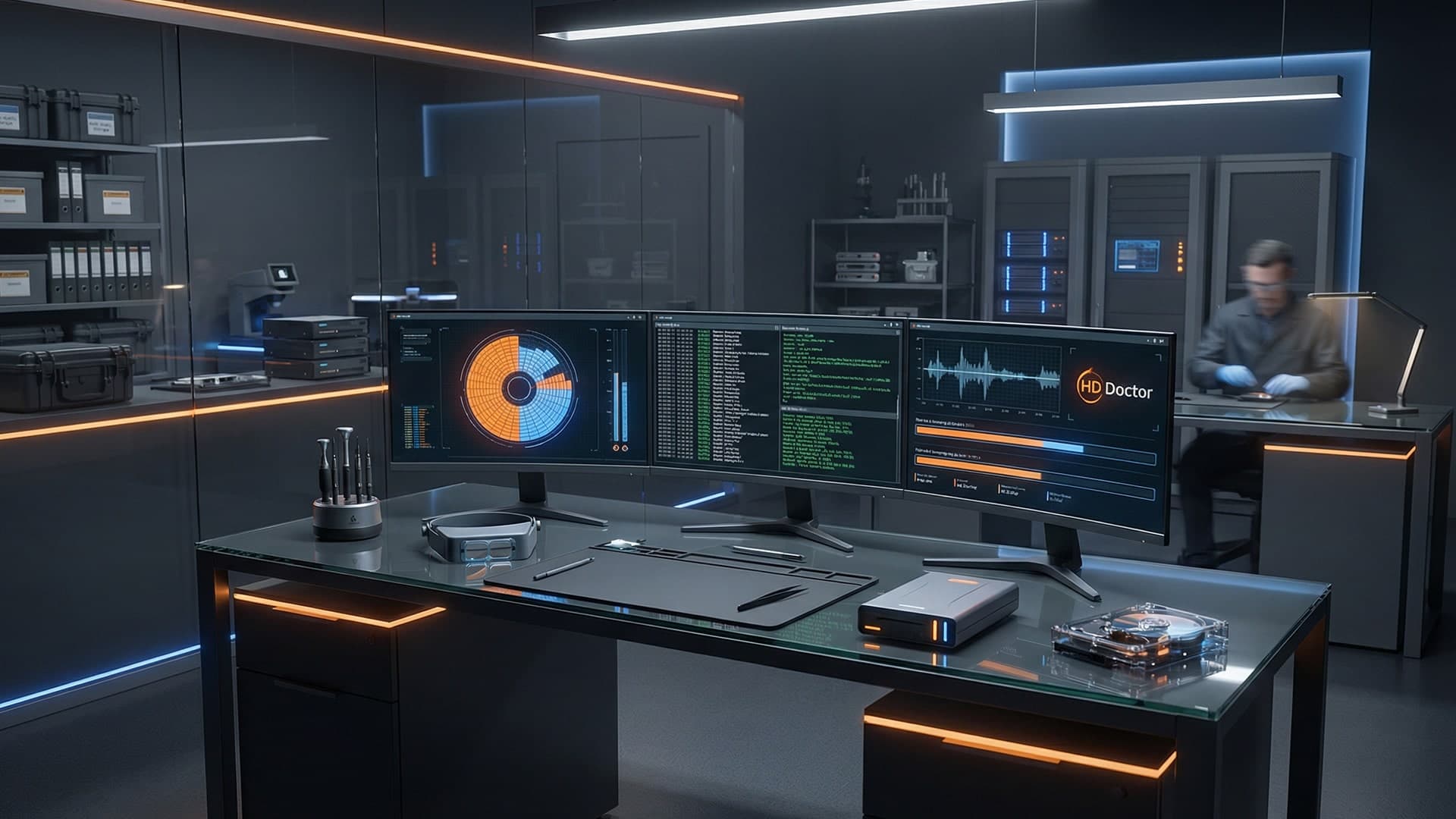
When SOC needs internal forensic capability
In companies with 500+ employees or regulated sector (financial, healthcare, government), internal forensic capability dramatically accelerates response. Small cases (compromised workstation, insider suspicion) resolve in hours. Complex cases (ransomware, leak) still require specialized lab, but initial preservation work saves days.
Essential kit in 7 tools + 3 procedures
- 1.Hardware write blocker (~US$ 1,500-6,000). Tableau, WiebeTech or equivalent. Prevents accidental writing to suspect media during initial analysis. One-time investment, 10+ year durability.
- 2.FTK Imager or dc3dd (free). Bit-by-bit copy with simultaneous SHA-256 hash. Output in E01 (EnCase) or RAW format. Main collection tool.
- 3.Velociraptor (open source). Remote and scale forensic collection. Runs on endpoints without permanent agent install. Collects artifacts (logs, registry, prefetch, events) in minutes.
- 4.Wireshark + Network forensics. Network traffic capture and analysis. Identifies C2, DNS exfiltration, anomalous communication. Free. Daily procedure for ambiguous EDR alerts.
- 5.Volatility 3 (memory). RAM capture analysis. Detects hidden processes, injected code, persistence. Combined with FTK Imager for initial capture.
- 6.Autopsy or SANS SIFT Workstation. Full filesystem forensics, free. NTFS/ext4 analysis, deleted file recovery, timeline.
- 7.Dedicated evidence storage. Minimum 50 TB on offline server or safe. Hash + numbered seal. Documented chain of custody.
- 8.Documented chain of custody procedure. Formal template with mandatory fields. Numbered seal in each transfer. SOC team training.
- 9.Evidence collection procedure. Playbook by incident type (infected workstation, leak, ransomware). Capture memory first, then disk, then logs, then shutdown.
- 10.Escalation procedure to external lab. When case exceeds internal complexity, forward to HD Doctor or equivalent with material already preserved. Reduces total timeline by days.
FAQ
Typical total kit cost?
Hardware (write blocker, dedicated storage): ~US$ 10-30K. Software (all mentioned are open source). Training of 2-3 analysts: ~US$ 5-15K in SANS/EnCase course. Total: ~US$ 15-45K initial capex. Payback in 12-18 months due to response acceleration.
Forensics vs incident response, what's the difference?
Incident response: immediate action to stop and remediate. Forensics: post-fact analysis with evidence preservation for legal use. Modern SOC integrates both. Forensics is particularly important when there's insider suspicion or potential legal action.
Is it worth it for small company (< 100 employees)?
Generally not — investment doesn't pay back. For SMB, hiring outsourced SOC with included forensic capability is more economical.
Open source vs paid (EnCase, FTK Professional)?
Open source covers 80% of cases. Paid have advantage in: (1) court case — paid-tool reports have higher acceptance by custom; (2) official support in complex cases; (3) corporate integration (Active Directory, SIEM). For company doing forensics regularly, paid is justified.
Want help building internal forensic capability?
Kit setup + SOC training + documented procedures + retainer for complex cases.